↓
 

Ted Krever: Writing and other forms of torture

  • Home
  • About
  • My Books
    • A Crafty and Devious God
      • Crafty God excerpt
    • After
      • After excerpt
    • Green
      • ‘Green’ Reviews
      • Green excerpt
      • Green Excerpt 2
    • Howling at Wolves
      • Howling at Wolves excerpt
    • Mindbenders
      • Mindbenders Excerpt
      • Mindbenders’ Reviews
    • Mindbenders 2: The Fiery Sky
    • Swindler & Son
      • Swindler & Son – The Start
      • Swindler & Son Reviews
    • Swindler & Son 2: 100% Genuine Forgeries!!
      • Swindler & Son 2 Excerpt!
      • Swindler & Son 2 Reviews
    • The Bequest
      • Bequest excerpt
  • On Sale Now!!
  • Video Trailers
Home - Page 22 << 1 2 … 20 21 22 23 24 25 26 >>

Post navigation

← Older posts
Newer posts →

Un-American Activity! On My Blog! (sort of)

Ted Krever: Writing and other forms of torture Posted on July 20, 2011 by ted kreverJuly 20, 2011

I don’t get this – readers are buying my paperbacks and not claiming their beers!

This is blatantly un-American activity, as far as I’m concerned.

Major corporations have spent millions – billions even – perfecting systems to lure you, the patsy consumer, into buying some worthless item by attaching something else FREE (anything FREE, if you think about in a certain way, being worthless also) – and then to cheat you out of that worthless thing afterward.

Uh, not the worthless thing you bought…the worthless throw-in that you wanted more than the worthless thing you actually bought because it was FREE (which is to say, worthless, but in capital letters).

Maybe it would be easier to understand if I had an example…

Ah yes, the wonderful mail-in rebate. How many millons of those do I have in my receipt folder (I have a receipt folder–if I ever need a receipt, I know I have it, though it’ll be six months rutting through slips for VHS copies of ‘Ghostbusters’ and ‘The Muppet Movie’ before I find the one I need).

we found your luggage...

If you’re giving me fifty bucks off on that nifty toaster/iron/fax machine, why not just give me the fifty bucks at the register? Because you know I’m not going to fill out the 72 blanks on the form, mail it in (I haven’t been to the post office since I gave up on finding an agent–another benefit of indie publishing) and then wait for you to receive it and decide to honor it (how can I prove you got it? It went through the POST OFFICE! It could easily have been routed to Katmandu, along with my luggage from that flight to Houston in 1978).

Anyway, all I’m saying is, if huge corporations who very clearly have better things to do than worry for one second about their own customers (try calling CUSTOMER SERVICE sometime if you have any doubts about that one) can go to all this trouble to cheat people out of something worthless (FREE but without capital letters), then how could I be going so wrong here?

Hef - with ? and ?

I’m offering something I sweated blood for – for years – and throwing in FREE BEER! I mean, how many words go better with FREE? Look at the symmetry–the words even look like brothers or sisters…or twins – but let’s leave Hugh Hefner out of this.  And I’m not even going to TRY to scam you out of it! You just identify yourself and beer can be yours! And you’re not taking me up on it!

For Shame, America! That’s all I can say!

smiling dick - doesn't get a beer (even if he buys a paperback)


I hope we clear this up in the next 24 hours or I will be forced to locate you and force beer upon you at an undisclosed location I’ve just leased from Dick Cheney. And, just to eliminate any and all resistance, I will admit I can be convinced to exchange the beer for a nice Malbec. So come one, come all, claim your prize while it’s worthless!

That’s all I have to say on the subject. And, as usual in my case, all I have is more than enough.


Posted in Big Sale!!!, My Books, Print on Demand, Writing | Tagged Big Sale!!!, free beer, Green, mindbenders, paperbacks, publishing, the web, writing | Leave a reply

The Beer Buying Continues!

Ted Krever: Writing and other forms of torture Posted on July 19, 2011 by ted kreverJuly 19, 2011

It’s time to renew the ‘Buy A Paperback-I Buy You a Beer’ Promotion! So, since I’m busy writing the second Mindbenders (and you haven’t read the FIRST one yet!), I’m just going to run it again!

The Internet is supposed to break down the walls between writers and readers and that all sounds good but I’m tired of metaphors. Let’s talk REAL interaction!

beer

You buy a paperback – I buy you a beer!

I’m not promising some expensive micro-brew – I’d like to still make something on this deal. But yes, you could be a pioneer in new frontiers of Internet marketing! (When you say stuff like that, you have to have an exclamation point at the end – the union insists.)


Here is all the fine print (and I printed it big for you this time, since you’re not as young as you used to be):

our legal department

You (hereafter referred to as ‘You’) buy a lovely trade paperback version of ‘Green’ or ‘Mindbenders’, my two best books (Moneyback guarantee, as per our legal department: If you’re not entirely satisfied after thirty days, I don’t know what you can do about it) on Amazon Createspace for the bargain price of $14.99.

Buy the ‘Green’ paperback here.

Buy the Mindbenders paperback here.

Then you (‘You’) email me (hereafter referred to as ‘Me’ or ‘I’, depending on the technicalities: see Marshall vs. Westmoreland, 1857, ipso facto, et al) at tedkrever@gmail.com (Address line: Free Beer Offer) and tell me the next time you’ll be in New York. If I can work out the timing (as long as I’m not working), I’ll meet you someplace  and we (hereafter referred to as ‘We’, within limits) will have a beer. You get to ask me one question while I’m sober (That doesn’t mean I promise to answer). Of course, after I’ve had a few, you can ask as many questions as you like.

For those of you who read my books and thought ‘Wow, what an imagination – I wonder what this guy is like’, here’s your chance to find out. For those of you who (wisely) thought, ‘What a lunatic!’, buy the ebook. It’s cheaper less expensive but no beer.

more beer

This offer good until I decide not to offer it any more. All disputes to be arbitrated by the firm of Hungadunga, Hungadunga, Hungadunga and McCormack. (Wait-you left out a Hungadunga! And you left out the most important one! If you know where that comes from, you probably qualify for another beer)


All patents pending, no animals were harmed in the making of this offer, side effects may include drowsiness (almost guaranteed), nausea (not the Sartre kind), lack of libido and an unexplained craving for S’mores.

Sorry, it’s just the kind of day I’m having…but I really mean it. Buy the book, I buy the beer.

You’re on your own from here…

Posted in Uncategorized | 3 Replies

‘Something Different – Something Real’: ‘Green’ Review

Ted Krever: Writing and other forms of torture Posted on July 17, 2011 by ted kreverJuly 19, 2011

Review by: Katy Sozaeva on July 16, 2011 : star star star star star
I was at first reluctant to accept this book to read and review, but after my enjoyment of Ted Krever’s “Mindbenders,” I decided to give it a try, and I am glad I did so. While I am not a fan of romance or typical women’s literature, this story provides something different – something real. It would provide too many spoilers to even attempt a plot synopsis. “Green” is about life, love and belonging; it is about desire and being desired; it is about gaining a new lease on life by allowing yourself to truly feel. While the author has described it as romance, it is not your typical romance story – I’m not sure how else one would describe it, but do not go into this book thinking you will be reading anything typical. This novel is, quite simply, about people; their desires to be wanted, and their effects on those around them in their struggles to belong.

Paul (formerly somewhat of a star in the television business world) and Em (a horsewoman and painter who has homes in both Ireland and the U.S.) have been friends since their time at Sarah Lawrence University; while Em has made it plain she would like a relationship with Paul, he simply does not feel the same way about her, despite how much he loves her. She has invited him to come to Ireland to spend some time with her there. While there, Paul will learn the difference between just surviving and really living, and that truly living, while chaotic, is also exciting. Ted Krever has really hit the nail on the head, and has given us a unique look into the mindset of men, rather than the typical romance, which is told from the woman’s point of view. While the overall story would be considered drama, there is also a great deal of subtle humour and I found myself laughing aloud more than once, only to shortly thereafter find myself deeply touched.

The descriptions Krever gives of Ireland are alone worth the price of the book; but the whole story is beautifully done, smoothly plotted and brilliantly executed. I can highly recommend this book to anyone who enjoys a good story, no matter what it is about. If you like reading about horses, Ireland, friendship, love in any form … well, the list goes on. Give “Green” a chance – I truly believe you will enjoy it.
‘Green’ is available as an ebook in all formats – and remember, if you buy a trade paperback, you qualify for the ‘Free Beer with the Author’ giveaway! Details here.
For an excerpt, click here.

For another excerpt, click here.

click here for Amazon Click here to
purchase on Amazon.
click here for smashwords Other e-readers, click here for
Smashwords.
Click here for
trade paperback.

Posted in Big Sale!!!, e-books, My Books, Reviews, Writing | Tagged book reviews, e-books, Green, Iraq War, Ireland, paperbacks, story, video trailer, writing | Leave a reply

‘Mindbenders’ excerpt 2 – Greg in Iraq

Ted Krever: Writing and other forms of torture Posted on July 14, 2011 by ted kreverJuly 25, 2011

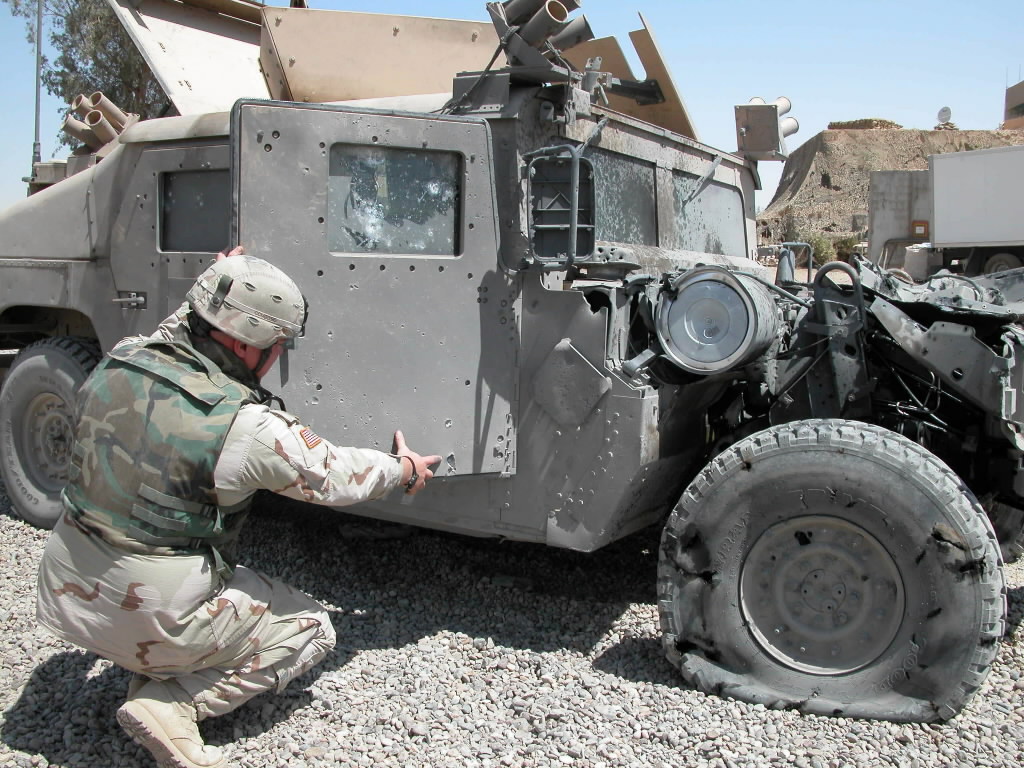
Excerpt #2 from ‘Mindbenders’, second of the sections specifically written about soldiers in Iraq. I offer this as a pale version of what those men and women lived with -and a reminder of the crime we’re doing by neglecting our veterans once they get home.

Just to be clear: I think we bungled Afghanistan three miles from Tora Bora and went into Iraq to steal the oil and encircle Iran. But none of that has anything to do with the soldiers.

Our soldiers made the best they could of a bad situation. They tried to do good work and improve what they found on the ground. They put their lives on the line and even when they came back alive, the war came home with them. Now they’re struggling against our own government, who is indifferent to anyone’s suffering and particularly the people it owes the most. You don’t send people out to take a bullet for you and then neglect them when they get home. At least you shouldn’t (does that word mean anything anymore?)

Just think about it.

Excerpt 2 follows:

There are kids squirreling around the shed, maybe eight, nine years old. They might be stealing something—that would be okay. But they might not.

They hide bomb material in sheds like that sometimes—they could be using the kids to get it or set the fuses. They use them like that sometimes too. We met a guy who was stationed in Najaf who said that happened to his outfit last week. Maybe there’s another reason—maybe they’re just playing—but we don’t know. And what you don’t know can hurt you.

So our fingers are on triggers, everybody’s fingers, waiting, tense, clenched twitching. EventuallyMarshall’s finger twitches and we have screaming kids with a bullet through the jaw or a broken collarbone or something. Maybe there was a reason. Maybe there wasn’t.

We’re convoying. We’re always convoying. Low stretches of stores and houses, business signs in Arabic, French and English, laundry hanging from windows and long corridors of smooth wide highway—Saddam built great roads, gotta give him that.

We pass a market and everybody in the stand waves. We wave back—this is the first couple weeks, where people are still waving. I hear a noise and look the other way for just a second—when I look back, the woman behind the stand is leveling a Kalishnikov at us. The first time it was a woman, we hesitated. Hendricks took a round in the neck that time, just above the armor. Now, nobody hesitates—she takes about twenty rounds in three seconds, the blood seeping into the sand as fast as it comes out of her and then her body seeping into the ground, swallowed up like quicksand or vanishing powder.

We drive as fast as we can go. Anything, just anything, could be a bomb—garbage cans, maildrops, cardboard boxes along the road. They trigger  them with alarm clocks, cell phones, garage door openers, VCR remotes. Clever shit people here, dammit.

The first time we take a direct hit, we start cursing a blue streak and laughing, laughing from relief. Shit, that was big. Good baby, good baby, this Hummer is good. What nobody says but everybody thinks is We made it.

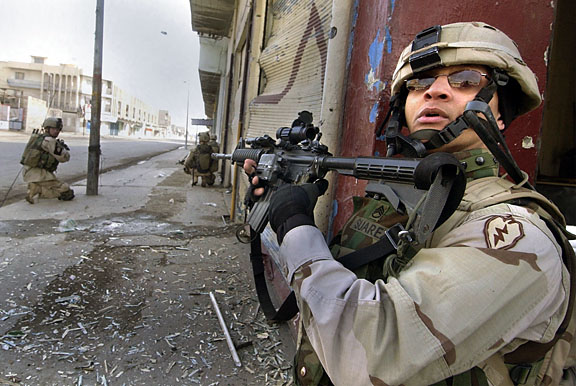
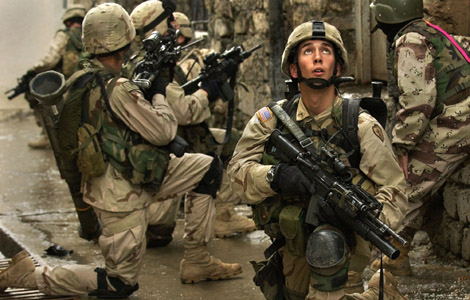
(AP Photo/Jim MacMillan)

But sometimes, it isn’t bombs—it’s just bullets, stray bullets, aimed bullets, who knows? This time, the big diesel rig in front of us takes five bullets in the engine and loses power and we leave him behind with a Hummer to take on personnel. We keep moving—we’ve got three more trucks to get to destination. Watch that bottle there—move that fucking VW, make him move. It’s boring and endless; beyond all the rest, the tension can kill you.

And two minutes later, the horizon erupts, end to end—the earth jumps up and down like it’s a trampoline and the world ahead is billowing smoke. The KBR truck in front took an IED and there’s a hole the size of a house in the middle of the highway.

So now we’ve got to stop, stop completely, try to establish a perimeter and bag everything—all the pieces, shards of bone and bits of flesh, any speck that might have once been part of a person.

Is this something? Take it. Inspecting every sliver, every fiber on the ground, carefully, thoroughly, always aware we’re stopped, stopped dead, completely in the open.

They’ll shoot us, shoot at us. That’s what they do. They do it when we’re hauling sixty around the perimeter so what are they going to do now that we’re hauling zero  in the middle of town, on our knees picking up the pieces? They’ll be shooting and soon.

Ignore it. Keep looking. Miss nothing. Take everything that’s human, every mote that might be, anything that might once have breathed.

Don’t miss one…anything.

Because there’s folks at home who don’t want to be watching TV one night and see part of their kid being waved around, beaten on, burned up one last little bit more by some raghead geek on a bridge.

Don’t miss a speck. 

Posted in e-books, My Books, veterans stories, Writing | Tagged Afghanistan, e-books, Iraq, Iraq War, mindbenders, ptsd, veterans, writing | Leave a reply

My Vet Story from ‘Mindbenders’ (Part One)

Ted Krever: Writing and other forms of torture Posted on July 13, 2011 by ted kreverJuly 25, 2011

I received an email last week from a woman who got a copy of ‘Mindbenders’ in a GoodReads giveaway. I posted it then but here it is again, in case you missed it (I have a reason so bear with me, please):

Hi Ted,
This is a very difficult book for me. My son was in Fallujah 10 years ago. Reading passages of your book brings it all back so fresh. It steals my breath and makes me cry. Even though he is home and is now walking better than when he came home the mental pain is still there as it was back then. I think you did a fantastic job making it real. If for nothing else, the way you bring Greg and his PTSD to life, makes this book an important read. Everyone who thinks that they should not support the soldiers because they don’t believe in the war should be required to read this. As difficult as reading it is I am grateful you wrote it and permitted me to read it. Thank you.
Cristi

I did a lot of research for the sections of ‘Mindbenders’ that depicted Iraq. I was shocked at the number of memoirs about life in the Green Zone in Baghdad, compared to the tiny number of books that concerned the actual troops.

I became friends years ago with a couple of Vietnam vets—the way we treated those men was a national disgrace. We seem about to do the same with this generation of vets and that’s only doubling down on the sin.

Whatever you feel about the wars (I’m agin ’em), the soldiers were human beings trying to survive in an incredibly bad situation—and when they came home, the war came home with them. And no one is doing a serious job of trying to care for them. They did this for us, after all.

So I’m going to post the two excerpts from ‘Mindbenders’ that deal directly with the war. From my research, I suspect that what I’ve written is a pale version of the real thing. Nonetheless, I hope you’ll read it and think about the way you view the soldiers who went through this and worse in real life. I’m not pointing fingers; I’ve walked past people on the street when I could have stopped to help. But it’s never too late to open your eyes.

Excerpt Two tomorrow, Excerpt One follows directly:

I hear the crackle in the middle of my head. Tango Seven—multiple events in your vector, last five minutes. Exercise caution. Sound is a vibration. This vibration grows, echoes, deeper, shimmying through me. We’ve been waiting for action since we started staging. We’re soldiers, we joined up, no one made us. We want to fight. We want to prove ourselves, to find out who we are when the air bends and the fire fills us. We crossed the border two days ago and we’ve spent two days driving, swallowing pills, driving some more and sitting out a sandstorm that lasted six hours where nobody could sleep cause we kept saying to each other, They know this stuff and we don’t—when it stops, they’ll be on us in a minute but they weren’t and then driving driving some more, past blown-out buildings and blown-out tanks and my headphones screaming.

The waiting is killing. No more waiting. Fight. Fight now. That’s what I want because I don’t know what else to want. And then, without transition, we’re fighting. I hear the CRACK!! over the music and the Humvee right in front of us bounces into the air like a milk carton somebody kicked and we’re almost on top of it by the time we stop. It’s in the narrowest place, of course, wedged between two cinder block walls set close together, between two neighborhoods that hate each other and both hate us and we’re bogged down, nowhere to go, can’t get around it.

Man Down! Man Down! Monroe is shrieking into the headset and we see the Vee behind us drive right up and Shumwalt the medic jump out to help but he isn’t there more than ten seconds before he’s rushing back to his mount, shaking his head like it’s detached.

The wait, the wait, the wait, the wait.

I shut off the music, not that it matters much—the gunfire is louder than the headphones all the way up, loud enough to wake the dead. In which case, start with the medic—his head is severed by rounds from three different directions and then blown sky high by a rocket that takes out his Humvee, throwing it six or seven feet in the air and crushing it against one of the cinder block walls. Some guys scramble out—how are they alive?—they get five or six steps before being cut down. There’s too much fire from all over. These guys have guns and lots of them.

Half a second later, we’re in the crosshairs. The door and windows of our truck are pounded with bullets. It’s built for that, we’ve been told a hundred times but so many are coming at once that I watch the panel buckling right in front of me, puffing like the wrapper around the popcorn in the microwave.

I’m embedded, the writer, the carry-along, an extra, an amusement most times, a burden at the moment. I have a gun in my belt but it might as well be a cap pistol.

We’ve got to move—Ram it! Monroe tells Gunner, the driver. If his name is Gunner, why isn’t he the fucking gunner, dammit? Nonetheless, Monroe says Ram it so Gunner puts the thing in gear but then all at once, there’s a different banging on the doors, banging and screaming—two of the guys from the medic Vee want in. Get us out of here! I hear someone screaming and Philips opens his door at the same time Grover opens his. Just in time for the poor son-of-a-bitch on Philips side to get riddled six or seven times in his vest—not dead but knocked over and that saves him and us.

For just a second, everything slows down as the guys on the end lean out to pull the two grunts into the Vee. I’m sitting, staring out the windshield, a dazed drugged-up sedation case and my eyes widen as up the road on the other side of the burning Humvee crawls a bus.

The local town bus, the rattle-trap skinny-tire flaking-paint Fallujah regular city bus, low-cost rapid transit fucking bus on its rounds, following its route, the driver doing his usual civil service job of looking exactly ten yards ahead of him and no more. And now he’s opening his doors at the bus stop—which just happens to be in the middle of a firefight.

And as the doors are open on both sides of our Humvee and a thousand rounds are flying at us and Gunner is about to drive right over the flaming fucking Vee in front of us to get out of here, I see a procession of soldiers in uniform filing neatly off the bus. Like they paid their fare downtown and waited politely with their guns for twenty stops from there to the war. And now they’re lined up, joining the rest of the warring neighborhood factions, shooting at us while the last two start setting up a rocket launcher and aiming it right at me.

“Gunner GO!!!” I yell and Gunner puts the thing in gear as they haul the last soldier in through Grover’s door. Right then, Philips takes a round right in the neck that spurts all over the cab and he slumps to the floor. The rest of us all lean over to grab him and pull him up.

At that instant, I hear a sharp hiss and raise my head a fraction, a millimeter, a milli-millimeter or whatever’s smaller than anything—and see a rocket, the one launched by the bus soldiers, hovering right in front of my nose, passing so slow, so slow I can read the serial number on the side, right through the cab of our Humvee, screaming in one door, across the aisle between front seat and back and then out the other door without touching a thing, a person, anyone or anything. It explodes against the cinder block wall, happily about five yards behind us as we jump the other Hummer. My nose is singed black for a week. It’s three days before I can hear much of anything, even Metallica. But Gunner hit the pedal at the right time and we will live, at least a little longer.


Posted in e-books, My Books, The World, Uncategorized, veterans stories, Writing | Tagged e-books, mindbenders, oil, ptsd, real life, war | Leave a reply

New ‘Mindbenders’ Review

Ted Krever: Writing and other forms of torture Posted on July 10, 2011 by ted kreverJuly 10, 2011

Jan Buck‘s review on Goodreads -Jul 07, 11

5 of 5 stars
[[Mindbenders is one of the most pleasant surprises I’ve read in a long time. From the fast paced beginning to the last revelations, I couldn’t put it down. Simply put, the plot is fascinating, the characters well-drawn, the narrator fresh and intriguing.

I won’t give you spoilers, because I think others have adequately sketched the plot. This is one story you’ll want to discover the details for yourself. Mindbenders has something for everyone – science fiction, paranormal fantasy, thriller. It doesn’t matter whether you believe these programs once existed. You’ll believe in these characters.

I hope there is a sequel coming and that Mr. Krever won’t keep us waiting too long.]]

I’m working on the sequel now, Jan. In the meantime, for those of you who haven’t read the book yet, here’s your chance. The ebook is still only 99 cents! But act fast – I’m greedy.

click here for Amazon Click here to
purchase on Amazon.
click here for smashwords Other e-readers, click here for
Smashwords.
Click here for
trade paperback.
Posted in e-books, My Books, Reviews, Writing | Tagged Big Sale!!!, e-books, mind power, mindbenders, thriller, writing | Leave a reply

About Iraq, PTSD and ‘Mindbenders’

Ted Krever: Writing and other forms of torture Posted on July 7, 2011 by ted kreverJuly 25, 2011

If you ‘re looking for my dispatches from Thrillerfest, they appear directly below this post:

Those of you who’ve read ‘Mindbenders’ know that the character who tells the story, Greg Hirsch, is a PTSD Iraq vet. I did a bunch of reading to prepare for his character and had a longstanding friendship with a couple of Vietnam vets but never managed to make a connection with the younger guys. So I sweated that part of the book more than any other, because I took on a special responsibility with that character.

I got this email this morning from a woman who got the book in a Goodreads giveaway. It means more to me than any response I’ve ever gotten:

Hi Ted,
This is a very difficult book for me. My son was in Fallujah 10 years ago. Reading passages of your book brings it all back so fresh. It steals my breath and makes me cry. Even though he is home and is now walking better than when he came home the mental pain is still there as it was back then. I think you did a fantastic job making it real. If for nothing else, the way you bring Greg and his PTSD to life, makes this book an important read. Everyone who thinks that they should not support the soldiers because they don’t believe in the war should be required to read this. As difficult as reading it is I am grateful you wrote it and permitted me to read it. Thank you.
Cristi
For more information on the book and to purchase, click here.

Posted in Mind Power, My Books, Reviews, The World | Tagged meaning, mind power, mindbenders, ptsd, real life, writing | 1 Reply

The Amateur at Thrillerfest

Ted Krever: Writing and other forms of torture Posted on July 6, 2011 by ted kreverJuly 9, 2011

Day Four:

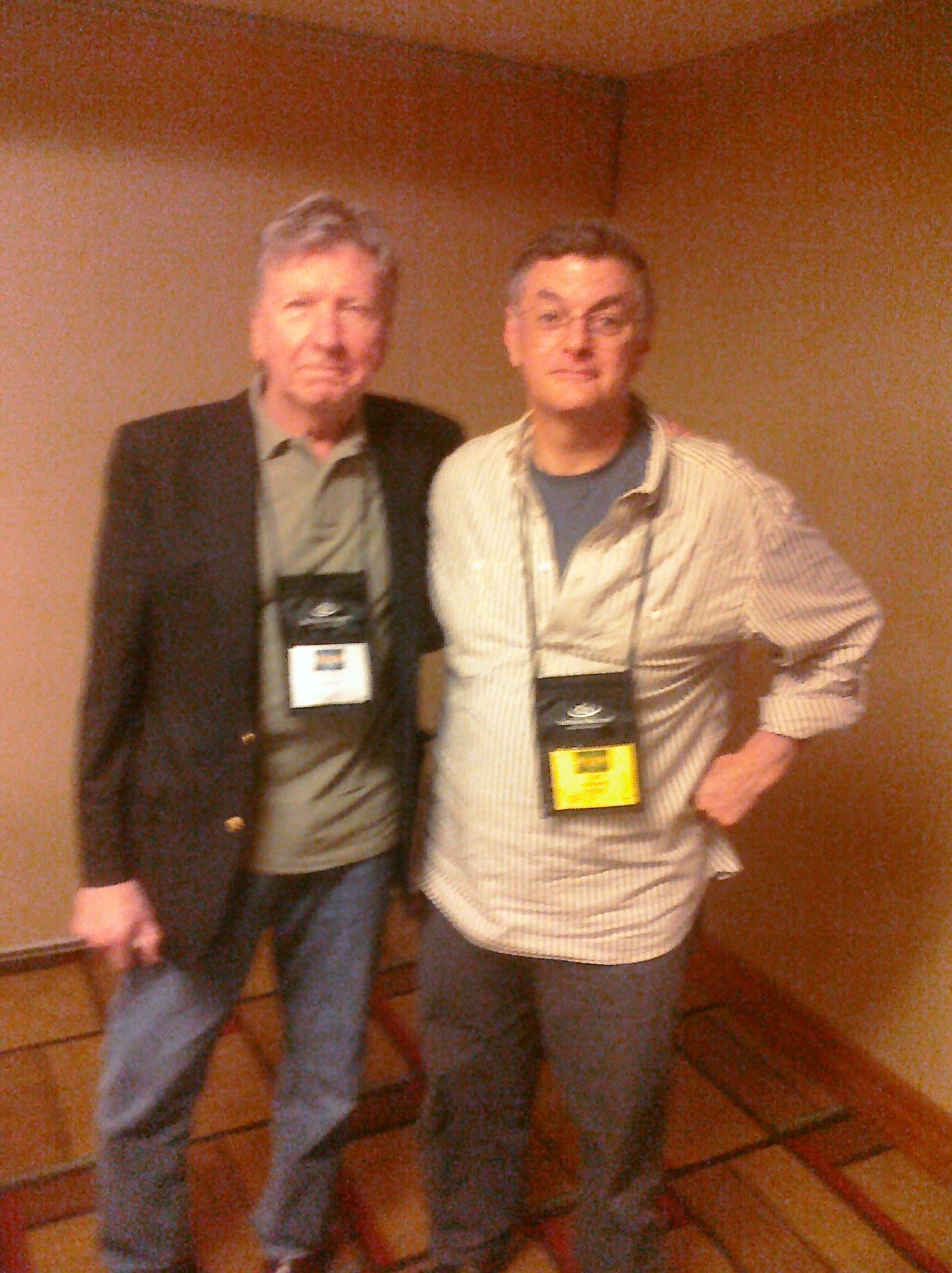
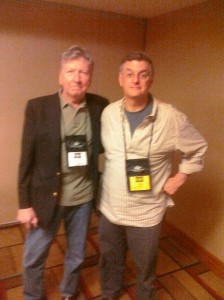
a couple of Jersey boys-Ted and F. Paul Wilson

A much looser, more relaxed day. Yesterday by about 3, I was fried toast. Today is better.

From ‘What Lies Are Spies Telling?’ a panel discussion of spy thriller writers:

-Sign in the CIA gift shop (reportedly they have a nice gift shop at Langley): Do Not Use A Credit Card While Under Official Cover.

-Jeffrey Deaver, who worked for Ronald Reagan says we would have won World War II without intelligence work, we would have won the Cold War without intelligence work but we cannot survive in a terrorist environment without intelligence work. The threat isn’t as total—we’re not up against annihilation on a national or international level—but it’s diffuse, all around. I find the first point doubtful and the second even moreso but the third is hard to argue.

-I couldn’t see all the panelists from where I was sitting, so can’t give a proper attribution but here’s an intriguing question: As the US doles out more and more intelligence work to private contractors, what happens when there’s a conflict between the national interest and the corporate interest? What happens when the corporate agenda is different? If a former agent gets his Top Secret clearance from the federal government and his paycheck from the contractor, as they say in the spy trade, who owns him?

-There is a writer’s group at CIA headquarters at Langley—and a lot of them not writing spy novels.

-At the end of the panel, the writers were asked what was their favorite thriller. The answers: 2 for Frederick Forsyth’s Day of the Jackal, 4 for John Le Carre’s Tinker, Tailor, Soldier, Spy. Any of you who follow this blog know how highly I regard Le Carre so that made me happy.

Later on, by the way, RL Stine of ‘Goosebumps’ fame said his favorite thriller was ‘Rosemary’s Baby’ by Ira Levin. He said Levin was one of the very best. Never read him—he goes on the list.

From the Thrillermaster interview with Ken Follett:

Follett was talking to his friend, a screenwriter who’d done, among other things, ‘My Beautiful Launderette’ (I can’t look it up here) and asked what he thought readers want. The friend said “I never think about what readers want.” Follett’s answer: “That’s why you’re a great writer and I’m a rich writer.”

Now sitting listening to David Morrell on craft.  Highlights:

He sits down and writes a letter to himself about why this book? He cites a note Frank Sinatra had on the door of his dressing room that said ‘You better have a damn good reason to knock on this door.’ Morrell says, “You better have a damn good reason to write this book.” So he writes a letter, about what he likes about the story, what he’ll learn in the research (he got a pilot’s license two years ago as a direct outgrowth of research), how the technique the story will require will expand his writer’s consciousness.

‘First Blood’ the novel that introduced Rambo, was 650 pages and awful. He got discouraged and put it away. When he came back to it, he read a section from the point of view of a deputy and decided it wasn’t necessary so he ripped it out. And proceeded to make the same decision about all the characters except Rambo and the officer. By the time he was done, the book was 300 pages and taut. So he says, “Writers worry too much about the first draft. It’s a process of discovery.”

Morrell was a professor of literature first and he speaks eloquently and at great length about the pitfalls of first person. It’s prone to narcissism, tends to ramble and the narrator has to justify how the narrative got to us, the reader.

“There are only about a thousand people in this country making a living writing novels.”—Morell

He says the sudden success of Amanda Hocking and Joe Konrath was part of the explosion of ebook sales and that that will end soon. There will be a marketplace for writing but none of us is likely to make lots of money.

Do not read in the same place you write. The associations are too strong. And change the medium—if you’re writing on the screen, read paper. Change the font—you see it differently. Do an edit on-screen, then an edit on paper.

Day Three:

Part Two:

I just spent the two most fascinating hours of the conference so far and I doubt anything to come later will change that judgment. It was, not coincidentally, the only panel here that was not video and audio taped for future sales.

The panel was Marie Harf, an impossibly cute blonde with granny glasses, a Midwest accent and a love of the Ohio Buckeyes and Chris, a very very fit lightly-bearded thinning-haired man with an easy manner and an authoritative way of speaking.

Marie is the Media Spokesperson for the CIA and Chris is an active CIA officer. They answered questions for our background. Often they answered cautiously, at least in terms of substance. Far more often than I expected, they offered a sense of humor and a working person’s perspective about their work. And certainly, they were the face of the Agency, the people sent out to put the best foot forward in public, Marie with the media and Chris (at the moment) recruiting potential officers on college campuses (but his background included a variety of analyst jobs all over the world).

I’m like most people. I am convinced I’m pretty good at sizing people up. I’ve hired a lot of people over the years and I’ve sent people (as journalists) into a few risky situations.  I’ve learned to  decide quickly upon meeting someone whether they’re someone I trust, someone I don’t, someone I trust publicly but watch closely or someone I can’t read.

These two never faltered. Their eyes wavered in a very real way when they couldn’t answer a question directly. I asked if Mossad was one of the more ‘innovative’ intelligence agencies and Chris smiled. I called him on it and Marie jumped in (it’s her job) about how effective Mossad is and how we have relationships with all sorts of intelligence services and the governments that run them and how our interests don’t always line up with theirs. Chris declined, smiling, from adding anything. But their reactions seemed entirely unforced and genuine, particularly after frank comments both made about dealing with Pakistan. And Chris’ comment that he assumed that every electronic communication he is involved in is monitored by the Chinese.

They both said MI6 did have a special relationship, that the two agencies operated in parallel and that the only time it became sticky was when they were both hoping to convert the same potential asset. At that point, Chris said, usually one service has an advantage and an agreement will be reached that, okay, you’re taking charge in this case and we’ll back off—as long as you share the tapes. “And then,” he said, “you just hope they share the tapes.”

Some vignettes:

Chris: The high points of my job are big stories that never made the papers.

‘I have repeatedly been forced to drink for my country.’

He said he was in the White House the day after Hurricane Katrina and that ‘it was fascinating to observe a wide array of personalities who lived up to their stereotypes and in some cases surpassed them.’

The key job of a real-life intelligence officer is to convince a friend or acquaintance, to lie, steal and betray their country.

One writer in the crowded auditorium launched into a speech (there’s always one in a crowd) about how the CIA had been wrong about everything in the past 50 years; wouldn’t we be better off if we just told the truth about everything but tactical issues?

Chris’ answer was (I’m paraphrasing) that if your expectation is that we will be able to accurately predict events that haven’t yet occurred, we will disappoint you most of the time. That’s not our job. Our job is to handle events when they happen, to provide context and find opportunities to effect change consistent with American interests.

He was asked whether he’d even been confronted with policy that he felt was just wrong and what did he do? His answer was that he’d tried to figure out whether his leaving would changed anything. Both times, his decision was that it wouldn’t. If he felt it would do any good, he said, he’d have resigned and they both offered up a couple of cases where high-ranking officers did so.  It’s a military mentality and, while I might quibble with it on existential grounds, it was convincing and basically all I could reasonably expect of an officer in this type of organization.

At the end, Chris told us where he would set a novel if he was writing a spy thriller, but I’m not sharing, particularly since I’m already working on something there for the next ‘Mindbenders’. I mentioned to him, very quietly, the area I was most interested in and he said  yes, that place was  ‘very interesting.’

All sorts of subjects were covered and I have Marie’s business card—she prefers, she says, to hear from writers ahead of time, rather than getting surprised after the fact. So anything you guys want to know, I’ve got an in! (Not!)

But the thing that was most striking to me was the impression the two of them made, as intelligent people who had a sense of morality and of purpose, who really believed that what they were doing was helpful and in fact important work, who were very aware of all kinds of contradictions and limitations but were trying to do their job the best they can.

Either that or they were very good liars (Spies—good liars—who’d’a thought?)

Actually, I’ll belabor this point slightly. Not to gum up a decent joke but here’s a clue to the real answer—an answer that is just as murky now as it was before the session. Chris said he joined up because he wanted to know what was really happening in the world, what was really behind that war, what was really going on in that coup in Latin America. And, of course, he couldn’t share any of that with us—but he’d shared the fact that what we think we know is only rarely related to what is really going on. And that might be the most insidious side of living in the secret world, the idea that some people should know and most people shouldn’t.

Nonetheless, they were very good ambassadors for a very morally ambiguous profession. I will remember them when I write the CIA officer in the next ‘Mindbenders’.

Part One:

I rushed this morning to make an early panel, ‘Alternatives to Traditional Publishing.’ I figured, logically, this should give me some good pointers to improve my Internet networking, help me market my books and find potential readers. Maybe somebody would finally have some mechanism to get my books into bookstores or at least offer the possibility.

The panel turned out to be something out of Monty Python. A panel of Romans scoffing at the Goths burning down the gates. It brought to a head all the hostility and fear I’d felt here every time I told someone I was an indie (see previous post below).

One panelist (I’m not naming anyone because they seem like perfectly intelligent human beings and, a year from now, if they’re smart, they’ll deny saying any of this stuff) said that, after having published several books already, he couldn’t get his latest published. His agent suggested self-publishing to him and he decided to do it.  The next several exchanges among the panel members included references to ‘the chaff’ and ‘the static,’ etc.

That’s us, indie writers, just in case you missed the gist.

Talk continued condescendingly about how readers were beginning to find their own gatekeepers among ‘the bloggers’ (it’s a species of simian with typing skills) in order to separate the wheat from the above-mentioned chaff. One of the panelists said “I tweet but I don’t know why. If anyone can tell me, meet me after the panel.” Laughter ensued on the riser, if not the floor.

It’s fascinating imagining the level of self-delusion involved in all this.

The one writer up there can’t get published anymore (because of ‘industry realities’) but still decides that everyone else who’s self-published is still ‘chaff’, instead of just like him but with inferior contacts or luck. People who are fortunate never want to consider the luck factor—it’s too terrifying.

He went on saying that, having decided to self-publish, he decided to do it ‘at a higher level.’ Which, to him, meant using an editor ‘who edited Stephen King’ and a ‘designer who’d been a senior executive at Random House’ (a Design Executive? He didn’t say). And using a distribution company affiliated with Ingram, one of the three wholesalers who fill up every Barnes & Noble, the few remaining Borders and the independent booksellers in your town (go there and buy a book today—strike a blow against stupidity!) to get at least some copies into bookstores.  How much did this cost him, he was asked? ‘Two MFA’s,” he said coyly.

So, the higher level approach is, the old elitist system doesn’t want him anymore but he’ll do his best to keep it alive anyway.

Okay, sorry, I’ll wave the red flag tomorrow, we can dance the socialist dance and smell the ganja. I’m a capitalist, folks. I’m out here everyday plugging books. But this is the sheerest crap and it’s the same tunnel vision that’s got the publishing business circling the drain in a whirlpool.

To these guys, indie books are ‘Aunt Mary’s book of cat stories.’ My first answer to that is, what’s wrong with that? The second answer is, indie books are the Sex Pistols, the Clash, Joe Jackson, Pearl Jam and Nirvana. Time to move on. Get the hell out of the way. A year from now, I (or someone just like me) will be on the panel telling these guys how to sell their books in the real world. Hopefully when we’re on the panel, we’ll be a little more open-minded. But my inclination at the moment is to spit in their eye.

I’m going to a panel. I’ll probably expand on this later, once the bile settles.

Day Two:

Something has been nagging at me the whole time I’ve been here and I’m just now recognizing what it is.

Writer’s conferences are always awkward places—writers, by and large, are misanthropes, happiest when allowed to stay in their own rooms pulling the wings off of flies. And if that’s writers, imagine what a convention of thriller and murder mystery writers are like. Allison Brennan, speaking about ‘The Villain’s Journey: Writing Compelling and Believable Villains’ this morning, noted that, going by the statistical frequency of sociopaths in America, we could expect to find at least thirty sociopaths at the conference. This fact was met with murmurs of approval from the rest of us. We’re an odd bunch.

Even so, conversation is constant and these are people who are fascinated by everything.  It’s not that we’re totally indiscriminate, it’s just that the world is full of weird and compelling stuff and writers remember it when they come across it. They may not remember their own phone numbers or anniversaries (I know, I know—that just makes us men) but they remember the fact that there’s a crawl space between the old and new California Legislature Buildings and a panel that only the janitors know that opens into this crawl space—and it’s big enough to hide a body, if you might ever need to do that.

We remember this stuff because that’s exactly the kind of stuff we will need to do, eventually.

So I’ve had a really fine time and enjoyed almost everyone I’ve met and all the conversations—with one exception: when someone asks me whether I’m ‘a published author or pitching [for an agent].’  Like those are the only choices.

My answer—“Neither. I’m an independent. Self-published. Ebook”—no matter how I put it—causes such awkward silence that I cringe now whenever I’m asked.

I feel like the Muslim at the Mary Kaye convention. I suck the air out of the room wherever I go. People smile politely and move on to another subject.

The interesting thing is, writers are generally very supportive of each other. But these guys seem very much relieved to hear I’m spending 80% of my life on marketing and that I’m selling books retail—one or two at a time. As though the fact that it’s onerous and difficult makes it one per cent less the way things really are—and the way things are going to be.

I mentioned this to the only other guy I met with a ‘Press’ badge. He said I was like the guy with the cloak and sickle in ‘The Seventh Seal.’ And that’s how it feels. They all know things are changing but the people who come to this festival—so far—are still clinging to the dream, the publishing company that’s going to take them under the wing and send them out to fly. The fact that those companies—even if they find them, even if they like them—are unlikely to do any such thing anymore is a dirty secret that nobody wants to confront.

I’m continuing to show up because I signed up, because I’m doing this blog. I had a good time today in Allison Brennan’s session, in a ‘Buzz Your Book’ workshop where I got some good ideas for marketing and in a 3-hour excursion to Greenwich Village with another author to visit the locations she was writing about in her book (because neither of us were pitching to agents, which was the major session of the afternoon). But so far, it feels like either I’m just dead wrong about where things are going or the rest of them are just not ready for the world I live in.

(Sotto voce: David Morrell is on my side…)

Part Three:

While I was writing the David Morrell portion below in a lounge just off the main section of the convention, I was having a conversation with an author who’s here pitching his young adult novel.

By the traditional standard, he’s having success. Lots of agents like his storyline. They want revisions, which is a positive sign, evidence they’re seriously interested.

The original book, he said, was very bare-bones, plot-driven, paced and written like a Michael Crichton thriller. He’d shown it to kids—not kids he knew but kids of friends and in the school system he works in (he’s a librarian). They loved it by and large.

The agents told him kids wanted more character development and that they wouldn’t follow his fast-moving plot and  different points-of-view. He told me their feedback had helped his writing but it sounded like the wife talking our how her husband’s infidelity had strengthened the marriage. He followed by bursting about how kids follow Lemony Snicket’s storylines and have lives that are so much more complex than ours were at their age (and maybe at our age).

And then he explained the thought process he’s observing among the agents and it catalyzed a lot of the thinking I’ve been doing since deciding to indie publish my own books.

He’s found the agents dividing into two camps:

The first camp want him to change the book until it’s just like something they’ve already sold—with one exception. The younger agents, he says, are more aggressive but have less power at their agencies. They feel they might be able to sell one new thing to their bosses but not more.

Here’s the bad news: these are the better group.

The other group were the ones who wanted the same thing as last year—with no exceptions. That is by far the larger group. He’s resigned himself to those few with at least a little imagination but after all the rewriting, he’s still here with nothing to show.

I asked, “How long have you been pitching this thing?”

“Four years—well, three, because I was in graduate school last year.”

So they’ve run him in circles and still haven’t taken him on. When I asked if he hadn’t considered going independent, he went on for about five minutes without ever giving me a real answer. And I saw myself a year ago, desperate for the approval and validation of a publishing establishment that has almost nothing to offer anymore—except that my mother would know I was a writer if they published me. So maybe it’s my mom’s validation I’m looking for (I’m okay with that).

I’m glad I went indie. This day is clarifying things for me in a very positive way. I may or may not ever sell a lot of books. But they’ll be mine, the best I can produce. I can stand or fall on my own abilities, on stories that speak to me. If I can’t find others they speak to, so be it.

On to the cocktail party (networking!)…

Part Two:

Interesting aside: Robert Parker is a model for reinventing an archetype. In ‘Finding Your Storytelling Voice’, Bruce DeSilva talks about how Parker’s Spencer character began as a direct clone of Philip Marlowe and then developed over a very short time into a very different character, developing friends (Marlowe was a strict loner), including cops (Spade and Marlowe despised cops), respecting women (I don’t even need to go there) and even developing a longtime lover who wasn’t a cliché.

But the highlight of my day and the payoff for coming, considering my doubts, was David Morrell. Dave Agranoff, you told me he was terrific and you did not lie.

Morrell stunned a room full of would-be series writers by telling them to stop chasing the market, stop trying to figure out what will sell, forget about the bestseller list and write what’s real to you, what eats at you, what matters. If you’re doing it for the money, it’s not worth it—the odds are too long, was the basic message. He puts it better: CD’s of the lecture can be had through the International Thriller Writers Association. See www.thrillerfest.com

This is the man who created Rambo, folks. And another thirty or forty books. Not exactly a touchy-feely guy. I’ve read a few of his books. They’re good taut thrillers—I like them. But he talked about how they were essentially his autobiography—years of writing about sons seeking fathers and then, after the early death of his own son, fathers seeking sons. He said the only way to write and continue to write is to know why you want to do it—and making the bestseller list isn’t an answer to that question.

He also said that, until publishers radically change the economics of their ebook royalties, he wouldn’t sign a contract. All anyone is interested in today is the ebook, he said. That ship has sailed.

It was like someone dropping water on me in the middle of the Sahara, folks. I might not have that much in common with most of the people at the conference, but if my consolation is to see things the same way as David Morrell, I’ll take it.

Not sure what comes next. There is a cocktail party, where I can do some networking. But I may have had the highlight of the conference already.

Part One:

So I’m at Thrillerfest in Manhattan for the next four days. Actually I’m at Craftfest, a subset, for the next two days; then Thrillerfest kicks in.

I’m not entirely sure what I’m doing here, other than networking, a vague, nebulous term that could mean almost anything. When I signed up, it was February and I thought I was going to go to Agentfest, where I could pitch my books to 40 agents (in 2 1/2 hours!). Now that I’ve gone indie, I’m just here to learn what I can and meet whomever I run into.

One of the first people I ran into turned out to be one of the organizers. With my typical shrewd business sense, I failed to get his name. But I doubt it matters much. When he asked if I was a writer, I said “I’m an indie” and his eyes began to wander. But he rallied and told me this was the best conference to find an agent. Seeing the uncertainty in my eyes (writers are good at that—thriller writers particularly), he added, “An agent’s always a good thing—you need to sell foreign rights.”

“I’ll need to sell more books first,” I said and he hurried off to find a crisis to avert. I have to do something about this compulsive truthfulness issue of mine. But the whole nature of this place—300 writers desperately trying to figure out how to land an agent and contract—makes me feel like I must be wrong about the indie thing.

The other thing that makes me feel a bit odd here is that this is turning out to be the Citadel of Professionalism. These are by and large people who are trying to learn how to crank out six or sixteen books a year.

My first session was ‘Essentials of Story Structure’ with Steve Berry, a very nice fast-talking Southerner (Death to Stereotypes!) who could authoritatively say things like “I don’t think you should really start violating this rule until you’ve got sixteen or seventeen books under your belt.”

I took this one because of you, Bill. I’ve been told lately my stories meander. I like meandering. I like Springsteen’s early songs, with the fifteen time changes. But it never hurts to learn.

I’m not going to give away Steve’s lecture—that wouldn’t be fair. But he did a really fast and entertaining job of explaining the three acts, what they have to include (unless you want to make your writing life more miserable than it already is) and the Eleven Rules of Writing.

I will share, for the moment, Rule Eleven. It’s a good one:

A Good Story will forgive bad writing; Good Writing will not forgive a bad story.

I skipped the session on how to pitch your book to an agent. I may be wrong but I’ll at least be consistent. I went outside and got two slices in a hole-in-the-wall with a drink for $2.75 (New York is wonderful for poverty lunch) and then doubled the bill with a small piece of 72% Cocoa Dark Chocolate Almond Bark in Grand Central. Worth it.

Time for my next class.

 

Posted in e-books, Uncategorized, Writing | Tagged business, e-books, publishing, thrillerfest, writers conferences, writing | 1 Reply

I’m an Amateur (and always will be)

Ted Krever: Writing and other forms of torture Posted on July 5, 2011 by ted kreverJuly 18, 2011

nope-not him

John Locke is getting a lot of attention lately.

No, not the philosopher—that’s the history blog down the block. Not the character on ‘Lost’ either. I’m talking about the man who just joined Stieg Larsson, James Patterson, Nora Roberts, Charlaine Harris, Lee Child, Suzanne Collins and Michael Connelly as the eighth author (and only independent) to sell a million ebooks at Amazon.

At one point Locke had seven of the top ten Kindle books on the list. All written in the past year.

And now he’s written a book called ‘How I Sold One Million eBooks in 5 Months!’ Guess what it’s about. Go ahead…I’ll wait.

I mean, you have to give the man credit for directness. He could have called it ‘How I Did It’—that’s shorter by a few words but it doesn’t capture the brazen avarice of the real thing.

And the book is the subject of all sorts of talk and comment among writers online, because sure, we’d all like to sell a million books.

him

Locke’s background, it turns out, is in niche marketing and he says himself that this is what has driven his success. He admits to being a mediocre writer…but then adds that doesn’t matter.

And he’s right…if your ultimate goal is his, the one he’s achieved.

It’s not that he runs his business ruthlessly or efficiently that gets me—that’s the only available way to do business. It’s that he views his own books as a commodity. The stories are contrived to facilitate a marketing and sales strategy.

Find a niche, figure out what that audience wants and give it to them. Locke says flatly “I write solely for the entertainment of that specific audience. I write the types of scenes they like, and avoid the types of scenes I know they don’t like. If I’m  not sure about a scene,  I sneak it in and get feedback from my readers after the fact, to make sure I’m staying true to the stories and characters they’ve come to enjoy reading.” If they don’t like it, no more of that.

Andrew Cuomo (or Mitt Romney - again)

So, thousands of writers around the world are reading those words today like they were the Gospel. And why not? There’s nothing new here, really. It’s the triumph of the focus group. It’s America today and you can’t argue with it, at least from the standpoint of utility. The kind of marketing that gave us Jalapeño Pringles, the new Andrew Cuomo and seventeen shows that are just like American Idol.


Ew.

The rule in writing for decades has been that 90% of the money is made by the top 6% of writers. However, from the time of Dumas and Dickens to Fitzgerald and Mailer, books were enough of a mainstream entertainment to support the dreamers as well as the commercial monsters. The ebook market might go there again someday soon. But not quite yet.

Other than those fortunate few, the mass of novelists have traditionally survived either by working in academia and writing in their (relatively copious) free time–or by grinding out six detective novels, six sci-fi’s and six historical romances each year, turning them out like a one-employee factory. Characters introduced by page thirty; major plot point around page seventy, climax at one-hundred ten and out by one-sixty. Next.

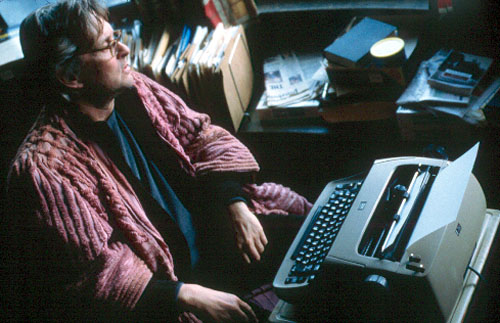
Michael Douglas in 'Wonder Boys' (note the typewriter!)

The academic’s books will surely be harrowing (critics love harrowing) and you can be sure there won’t be any killer robots from outer space or former Soviet mindreader spies battling international conspiracies in the catacombs of Rome.

There will, on the other hand, be lots of strangely charismatic writing teachers with bad marriages, midlife crises and affairs with their students (if you can’t do violence, it’s got to be sex). But they’re professionals because their job status depends on being published, and on the prestige of the book’s reputation.

The genre factory writers, on the other hand,  are professionals like all the rest of us—hamsters on the wheel. They’ll be homeless if they don’t produce, keep producing and keep selling. Their livelihood depends on making deadline and doing what Locke talks about, serving the audience’s need for entertainment, for more of the same.

Both approaches share the same weakness: the story is an afterthought. It’s the means to the end, not the end itself. For the academic, professionalism is justifying the teaching job. For the series writer, professionalism is writing the same formula over and over, as long as the books sell. Anything else takes too much time and they truly don’t have time.

So I’m an amateur. And hopefully always will be. I’ve got a dayjob with some major disadvantages – the hours are insane, the prestige level is below the floor, you’re treated by your own company as an inconvenience. But I’ll keep at it till I drop if I have to, if I can’t make a (modest) living writing my own way.

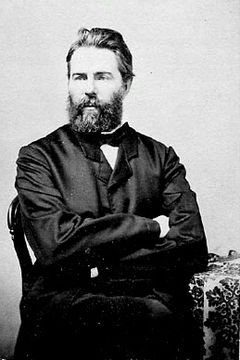
Herman Melville - 'Moby Dick' didn't sell out it's first printing in his lifetime

The amateur’s story is magic. At least it has the chance to be. A little ragged, a little messy and aiming for something more than going from Point A to Point B. It’s a process of discovery, a journey instead of simply reaching a destination. It comes from the heart and the stomach and the spleen. There’s something a bit mystical to the process, if not always the result (they’re never as good as you hope they’ll be when you start).

Affecting stories grow out of one person’s deepest yearnings, yearnings and wish-fulfillment or fear deep enough that the storyteller sometimes doesn’t understand the story until years after it’s finished and gone. Those are the stories that touch us, that we carry around inside from childhood or young adulthood, that speak to us when our own real lives call for a little heroism or some forgiveness of our own weakness.

Those kinds of stories force us beyond our boundaries. Nobody in a focus group ever voted in favor of moving out of their comfort zone. But when you make people want to, when you can sweep them up and carry them away, they remember.

I’m no snob. Readers need escapism. The most contrived formulaic pulp serves a purpose and a good one. But anything that confirms this society’s conviction that all is commerce, that the only things that count are the things you can count, is part of the problem, not the solution.

We need more things that sing, that break the barrier and the mold, that show a human being’s heart and mind were at work. Things that aren’t perfectly planned-out commercial enterprises. That show an uneven seam here and there. Things a machine couldn’t (or wouldn’t choose to) do better—or even the same.

That’s a place you don’t get by way of market research or commercial strategy. That’s a place you don’t get following the model of a culture that’s become professional wrestling.

You get there being decidedly unprofessional.

So count me as an amateur. I suspect the world needs more of us. The professionals are running the place into the ground.

Posted in Writing | Tagged art, business, critics, e-books, meaning, mystery, publishing, story, writing | 2 Replies

Good Read for a Rainy Day

Ted Krever: Writing and other forms of torture Posted on July 3, 2011 by ted kreverJuly 3, 2011

‘Mindbenders’ is now #78 on the Amazon Kindle Thrillers list! Help keep the momentum going!

“But Ted, I don’t have an e-reader!”

(Who was that masked man?)

No problem! Click here for FREE Kindle software for your PC, Mac, smartphone or iPad!

Haven’t you always wanted to read a book that would make you paranoid that everyone around was reading your mind? No? But now that I’ve mentioned it, doesn’t it worry you that everyone around you might be reading your mind and discovering how much energy you’re putting into a decision of 99 cents?

No worries! Just buy the book and they’ll look up at you with admiration for your decisiveness – and good taste!

(Don’t bother to thank us – that’s what we’re here for…)

Posted in Big Sale!!!, e-books | Tagged Big Sale!!!, e-books, mindbenders | Leave a reply

Post navigation

← Older posts
Newer posts →
Swindler2
Swindler2
Mindbenders
Mindbenders2
Howling at Wolves
Green
The Bequest
A Crafty & Devious God
After
Kindle software

Recent Posts

  • Welcome, old (and new) friends
  • Yet another 5-star review!
  • Another 5-star review for ‘Swindler 2’!!
  • Notes on ‘Swindler & Son 2’
  • Swindler & Son 2 is available NOW!

Categories

  • 9/11
  • Art
  • Big Sale!!!
  • Book Marketing
  • e-books
  • Everything Else
  • interviews
  • Mind Power
  • Mindbenders
  • Movies
  • Movies and TV
  • Music
  • My Books
  • On The Street
  • Print on Demand
  • Reviews
  • Swindler & Son
  • The Digital World
  • The World
  • Uncategorized
  • veterans stories
  • Video Trailers
  • Writing
  • Your Stories

Recent Comments

  • ted krever on The Subway in the Parking Lot
  • Tom Zoufaly on The Subway in the Parking Lot
  • Elaine Smith on About
  • Bob Trezise on The Weird Shit
  • ted krever on The Weird Shit

Blogroll

  • Alaskan Book Cafe
  • C.O. Moed's My Private Coney
  • Elisabeth Lohninger's Jazz Singing and Other Follies
  • Jenny Milchman's Suspense Your Disbelief
  • joe konrath's blog
  • RM Holdsworth's Backstory
  • The Lefsetz Letter

Archives

  • August 2025
  • January 2021
  • December 2020
  • November 2020
  • May 2020
  • April 2020
  • March 2020
  • May 2019
  • January 2019
  • December 2018
  • November 2018
  • October 2018
  • September 2018
  • August 2018
  • May 2018
  • March 2018
  • February 2018
  • January 2018
  • November 2016
  • October 2016
  • September 2016
  • August 2016
  • July 2016
  • June 2016
  • May 2016
  • April 2016
  • February 2016
  • December 2015
  • October 2015
  • August 2015
  • July 2015
  • June 2015
  • December 2014
  • November 2014
  • October 2014
  • September 2014
  • August 2014
  • July 2014
  • May 2014
  • April 2014
  • February 2014
  • January 2014
  • October 2013
  • August 2013
  • May 2013
  • April 2013
  • March 2013
  • February 2013
  • January 2013
  • December 2012
  • November 2012
  • October 2012
  • September 2012
  • August 2012
  • July 2012
  • June 2012
  • May 2012
  • April 2012
  • March 2012
  • February 2012
  • January 2012
  • December 2011
  • November 2011
  • October 2011
  • September 2011
  • August 2011
  • July 2011
  • June 2011
  • May 2011
  • April 2011
©2026 - Ted Krever: Writing and other forms of torture - Weaver Xtreme Theme
↑